Vong Meng (2018). Politics of language: Context in Cambodia, Singapore, and China: International forum of 60th anniversary between Cambodia and China, Phnom Penh Hotel, 21-22 June, 2018.
វង្ស មេង (២០១៦) ភាសា វប្បធម៌ និងប្រវត្តិសាស្ត្រ អត្ថបទចូលរួមវេទិកាវិទ្យាសាស្ត្រ រៀបចំដោយរាជបណ្ឌិត្យសភាកម្ពុជា ថ្ងៃចន្ទនិងអង្គារ ទី៥-៦ ខែធ្នូ ឆ្នាំ២០១៦។ ចុចទីនេះ ដើម្បីទាញយក PDF ឬ Doc PPTand PPTinPDF
វង្ស មេង. ២០១៦. សម្ព័ន្ធវិទ្យា. ការផ្សាយរបស់អ្នកនិពន្ធ ២០១៦
ចុចទីនេះ ដើម្បីទាញយក
Vong Meng. 2016. The Rights of Indigenous People in Cambodia: the Linguistic rights of Stieng. Presentation at the Fourth International Conference on Human Rights and Peace & Conflict in Southeast Asia, Bankok: Sukosol Hotel, 10-12 October, 2016. Click here for Draft of Full Paper
Venue:Bankok, Sukosol Hotelhttp://www.thesukosol.com/ 477 Si Ayuthaya Road, Phayathai, Bangkok 10400, Thailand
VONG Meng. 2016. ASEAN: One Community, Multi-lingual Nations. Presentation at Busan University of Foreign Studies, Korea, 27 May 2016. Click here for PTT to download and Here for Draft of Full Paper
សិក្សាកថាអំពីវេយ្យាករណ៍ភាសាខ្មែរក្រសួងអប់រំថ្នាក់ទី៥ ទី៦ និងទី៧
វង្ស មេង ២០១១ ឋានន្តរនាមខ្មែរសម័យចេនឡា ភ្នំពេញ អត្ថបទចូលរួមសន្និសីទជាតិនៅវិទ្យាស្ថានខុងជឺ។ clik here to download for PDF and here for odt
An Essay on the Khmer Grammar from Textbook grade 5, grade 6, and grade 7 from ministry of education. Click here to download with PDF file.
CALL FOR
PAPERS
Deadline: October 26, 2016
វង្ស មេង (២០១៦) ភាសា វប្បធម៌ និងប្រវត្តិសាស្ត្រ អត្ថបទចូលរួមវេទិកាវិទ្យាសាស្ត្រ រៀបចំដោយរាជបណ្ឌិត្យសភាកម្ពុជា ថ្ងៃចន្ទនិងអង្គារ ទី៥-៦ ខែធ្នូ ឆ្នាំ២០១៦។ ចុចទីនេះ ដើម្បីទាញយក PDF ឬ Doc PPTand PPTinPDF
វង្ស មេង. ២០១៦. សម្ព័ន្ធវិទ្យា. ការផ្សាយរបស់អ្នកនិពន្ធ ២០១៦
ចុចទីនេះ ដើម្បីទាញយក
វង្ស មេង. ២០១៦. សម្ព័ន្ធវិទ្យា. ការផ្សាយរបស់អ្នកនិពន្ធ ២០១៦
ចុចទីនេះ ដើម្បីទាញយក
Vong Meng. 2016. The Rights of Indigenous People in Cambodia: the Linguistic rights of Stieng. Presentation at the Fourth International Conference on Human Rights and Peace & Conflict in Southeast Asia, Bankok: Sukosol Hotel, 10-12 October, 2016. Click here for Draft of Full Paper
Venue:Bankok, Sukosol Hotelhttp://www.thesukosol.com/ 477 Si Ayuthaya Road, Phayathai, Bangkok 10400, Thailand
VONG Meng. 2016. ASEAN: One Community, Multi-lingual Nations. Presentation at Busan University of Foreign Studies, Korea, 27 May 2016. Click here for PTT to download and Here for Draft of Full Paper
សិក្សាកថាអំពីវេយ្យាករណ៍ភាសាខ្មែរក្រសួងអប់រំថ្នាក់ទី៥ ទី៦ និងទី៧
វង្ស មេង ២០១១ ឋានន្តរនាមខ្មែរសម័យចេនឡា ភ្នំពេញ អត្ថបទចូលរួមសន្និសីទជាតិនៅវិទ្យាស្ថានខុងជឺ។ clik here to download for PDF and here for odt
An Essay on the Khmer Grammar from Textbook grade 5, grade 6, and grade 7 from ministry of education. Click here to download with PDF file.
CALL FOR
PAPERS
Deadline: October 26, 2016
The
Journal of Institute of National Language (JINL) is an open access and
peer-reviewed journal published by the Institute of National Language (INL),
Royal Academy of Cambodia. The main objective of JINL is to provide an
intellectual platform for the national and international scholars. JINL aims to
promote and advance interdisciplinary studies in Khmer language and become the
leading journal in Khmer Studies.
THEMES
The
journal publishes research papers in all fields related to:
-
Khmer language,
-
language and culture of Mon-Khmer,
-
linguistics,
-
language of ethnic minorities,
-
literature,
-
epigraphy,
-
lexicography, and
-
translation (theory and practice)
The
journal is published in both print and online versions. JINL publishes original
papers, review papers, conceptual framework, analytical and simulation models,
case studies, empirical research, and book reviews.
JINL is
inviting papers for the Issues No. 10.
Send your
manuscript to the secretariat at inlrac.languages@gmail.com
SUBMISSION
All
manuscripts must be submitted electronically through the e-mail to the editor
at inlrac.languages@gmail.com. Authors are advised to follow
the Author Guidelines in
preparing the manuscript before submission.
Review and
Publication Process
A full
double-blind refereeing process is used that comprises of the following steps.
• Paper is
sent to reviewers for review both words and PDF files. The reviewers'
recommendations determine whether a paper will be accepted / accepted subject
to change / subject to resubmission with significant changes / rejected.
• For papers
which require changes, the same reviewers will be used to ensure that the
quality of the revised paper is acceptable.
• Author/Corresponding
Author will be notified about the possible date of publication (both online and
print).
• One hard
copy of the published journal (Print) for each article will be sent to the
author/corresponding author. The review process takes maximum one month.
COPYRIGHTS
Copyrights
for articles published in JINL are retained by the authors, with first
publication rights granted to the journal. The journal/publisher is not
responsible for subsequent uses of the work. It is the author's responsibility
to bring an infringement action if so desired by the author.
Publication
Fee
All papers
are free of charge.
AUTHOR
QUIDELINE
Manuscript
Preparation
1.
Language
The
language of the manuscript must be in Khmer (UNICODE FONT: Khmer OS Siemreap Size:11
, English (either American or British standard, but not the mixture of both)
and French.
2. Length
of paper
The length
of the paper should not exceed 15 pages preferably B5 JIS.
3. Title
Page
Title page
is a separated page before the text. It should include the following
information:
Title
Title
should be concise and informative. Try to avoid abbreviations and formulae
where possible.
Author’s
names and affiliations
Please
indicate the given name and family name clearly. Present the authors'
affiliation addresses (where the actual work was done) below the names.
Indicate all affiliations with a lower-case superscript letter immediately
after the author's name and in front of the appropriate address. Provide the
full postal address of each affiliation, including the country name, and, if
available, the e-mail address, and telephone number of each author.
Corresponding
author
Clearly
indicate who is willing to handle correspondence at all stages of refereeing,
publication and also post-publication. Ensure that telephone numbers (with
country and area code) are provided in addition to the e-mail address and the
complete postal address.
Sponsoring
information
If the
research is sponsored or supported by an organization, please indicate it.
4.
Abstract
A concise
and factual abstract is required (maximum length of 150 words). The abstract
should state briefly the purpose of the research, the principal results and
major conclusions. An abstract is often presented above the paper.
5.
Keywords
Immediately
after the abstract, provide a maximum of 5 keywords.
6.
Subdivision of the article
Divide
your article into clearly defined and numbered sections. Subsections should be
numbered 1, 2. (then 1.1, 1.1.1, 1.1.2), 1.2, etc. The abstract is
not included in section numbering.
7.
References
Author(s)
should follow the latest edition of APA style in referencing. Please
visit www.apastyle.org to learn more about APA
style
8. Citations
in the text
Please
ensure that every reference cited in the text is also present as a footnote.
9. Reference
List
References
should be arranged first alphabetically and then further sorted chronologically
if necessary. More than one reference from the same author(s) in the same year
must be identified by the letters "a", "b", "c",
etc., placed after the year of publication.
Journal of Khmer Studies from Udaya
UDAYA, Journal of Khmer Studies
MESSAGE FROM THE EDITORS5
Udaya was founded in 2000 in a very different context than that in which it appears today. For one, it was a print journal, in a time when we could not even imagine the possibility of disseminating academic research on the then still novel internet to an international community let alone to Cambodian nationals living in Cambodia. Times have changed, Cambodia has changed andUdaya is changing. The journal is now exclusively online. Current issues and back issues are free to all with simple registration on this site.
We remain nonetheless stubbornly committed to the ideals underlying the foundation of Udaya, and see the move to online publishing through the Open Journal System as a means of further pursuing their realization. We aim, still, to provide a forum for promoting multilingual interdisciplinary exchange on Cambodian culture in its broadest sense. While benefiting from a certain aterritorial nature and power of the internet, the journal remains rooted in Cambodia both in practical and conceptual terms. It is housed by a nascent local cultural institution,Yosothor. Yosothor is an independent non-governmental institution, which maintains close ties with national cultural and higher education institutions. The Udaya website, and each issue, is designed and maintained locally. The editorial mission is guided by an increased perception of the necessity to explore and support local perspectives within the context of globalized and globalizing discourse, research and publishing structures. The renewed commitment we make toUdaya and to the journal’s rootedness in Cambodia whilst we go online belies our belief in cultural specificity, and in the potential of attentiveness to the most local expression to talk back to today’s hegemonic power structures, be they otherwise local(ized), national or international. If we hereby affirm that the site of knowledge production counts, it is with the knowledge that within our pages we count multiple sites, none of which exist in isolation.
Our first online issue includes a range of art historical, historical and archeological work. Periodically we develop a thematic issue. The second online issue will accordingly be devoted to the topic of modern and contemporary Cambodian art and aesthetics.
Due to circumstances beyond our control, the present issue, exceptionally, does not include a contribution written in Khmer.
Ang Choulean and Ashley Thompson
Co-founders and editors
Udaya was founded in 2000 in a very different context than that in which it appears today. For one, it was a print journal, in a time when we could not even imagine the possibility of disseminating academic research on the then still novel internet to an international community let alone to Cambodian nationals living in Cambodia. Times have changed, Cambodia has changed andUdaya is changing. The journal is now exclusively online. Current issues and back issues are free to all with simple registration on this site.
We remain nonetheless stubbornly committed to the ideals underlying the foundation of Udaya, and see the move to online publishing through the Open Journal System as a means of further pursuing their realization. We aim, still, to provide a forum for promoting multilingual interdisciplinary exchange on Cambodian culture in its broadest sense. While benefiting from a certain aterritorial nature and power of the internet, the journal remains rooted in Cambodia both in practical and conceptual terms. It is housed by a nascent local cultural institution,Yosothor. Yosothor is an independent non-governmental institution, which maintains close ties with national cultural and higher education institutions. The Udaya website, and each issue, is designed and maintained locally. The editorial mission is guided by an increased perception of the necessity to explore and support local perspectives within the context of globalized and globalizing discourse, research and publishing structures. The renewed commitment we make toUdaya and to the journal’s rootedness in Cambodia whilst we go online belies our belief in cultural specificity, and in the potential of attentiveness to the most local expression to talk back to today’s hegemonic power structures, be they otherwise local(ized), national or international. If we hereby affirm that the site of knowledge production counts, it is with the knowledge that within our pages we count multiple sites, none of which exist in isolation.
Our first online issue includes a range of art historical, historical and archeological work. Periodically we develop a thematic issue. The second online issue will accordingly be devoted to the topic of modern and contemporary Cambodian art and aesthetics.
Due to circumstances beyond our control, the present issue, exceptionally, does not include a contribution written in Khmer.
Ang Choulean and Ashley Thompson
Co-founders and editors
Khmer Research Paper from France http://aefek.free.fr/travaux/news00010329.html
more: http://www.anthropology.hawaii.edu/People/Faculty/Stark/index.html
Miriam Stark, PhD
Professor
Curriculum VitaeOffice: Dean Hall 203C
Office Hours: click here
Phone: 956-7552
Email: miriams@hawaii.edu
Background
General Interests
Current Research
Selected Publications
Courses Taught
Service to Our Communities
http://sealang.net/monkhmer/dictionary/tutorial.htm
Mon-Khmer Languages Project
Paul Sidwell, Project Director
Doug Cooper, Co-Director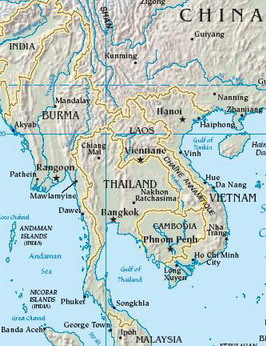 The Mon-Khmer Languages project is creating essential research and reference resources for the Mon-Khmer language family. The larger subgroup of the Austroasiatic stock (Munda is the other), the roughly 150 Mon-Khmer languages are of great antiquity and extraordinary linguistic interest, and are of primary importance for the study of Southeast Asian history and culture. Mon-Khmer languages are the national languages of Vietnam and Cambodia, and are found in communities large and small in India and China, and across broad swaths of Burma, Malaysia, Laos, Thailand, and the Nicobar Islands.The project has three focal points (see also the links on the left):
CRCL and the Mon-Khmer Languages Project gratefully acknowledge the support of the National Endowment for the Humanities, 2007-2009 and 2009-2011. Any views, findings, conclusions, or recommendations expressed in this website do not necessarily reflect those of the NEH.
Doug Cooper, Co-Director
The Mon-Khmer Languages project is creating essential research and reference resources for the Mon-Khmer language family. The larger subgroup of the Austroasiatic stock (Munda is the other), the roughly 150 Mon-Khmer languages are of great antiquity and extraordinary linguistic interest, and are of primary importance for the study of Southeast Asian history and culture. Mon-Khmer languages are the national languages of Vietnam and Cambodia, and are found in communities large and small in India and China, and across broad swaths of Burma, Malaysia, Laos, Thailand, and the Nicobar Islands.The project has three focal points (see also the links on the left):
the Mon-Khmer languages database, dedicated to the preservation and free distribution of language reference materials, including phonetic transcription, glosses, and citations.
the Mon-Khmer etymological dictionary, which provides an on-line hierarchical reference that puts the data in context. It is based on - and is extending greatly, with ten times as many reflexes, and a dozen intermediate branch reconstructions - the late H.L. Shorto's Mon-Khmer Comparative Dictionary (2006)
the creation of a collaborative worksite for Mon-Khmer language research - an an on-line architecture for extension, comment, and correction of language and etymological data.
Our core work - a language database of twenty-four languages from the twelve Mon-Khmer branches, an etymological 'backbone' that supports ongoing development, and complete on-line publication and website support - was within the first two-year funding cycle. In our second two-year cycle, we are adding languages that represent all MK sub-branches, as well as adding existing and new branch-level reconstructions.CRCL and the Mon-Khmer Languages Project gratefully acknowledge the support of the National Endowment for the Humanities, 2007-2009 and 2009-2011. Any views, findings, conclusions, or recommendations expressed in this website do not necessarily reflect those of the NEH.
-
Cambodian Political Economy, 1975-1990
March 2, 2010 Cambodian Political Economy, 1975-1990 Author: Michael Vickery ...Michael - March 2010 -
Imagining Cambodia
March 2, 2010 Imagining Cambodia Author: Volkman Toby Alice ...
March 2, 2010
CSQ Issue:
14.3 (Fall 1990) Cambodia
The Khmer language enjoys the longest actively flourishing written record of any Southeast Asian language, in hundreds of stone inscriptions from the seventh through early thirteenth centuries, more inscriptions during the sixteenth through eighteenth centuries, and then written works in all genres in the nineteenth and twentieth centuries. Most of the content of the inscriptions is political, administrative, and economic, not literary, and works of literature that can be dated earlier than the nineteenth century are extremely rare. A history of the language, however, exists - whatever the subject matter.
Even though they could no longer read the old inscription, Cambodians have always been conscious that they had a long written tradition, to the extent that language came to epitomize national life and culture. Any perceived or imagined threat to Khmer language was a threat to the very roots of their Khmer existence. Although arising in a very different milieu, Khmer language romanticism very much resembles that existing in Eastern Europe.
Literature Before 1975
The school system established by the French emphasized the language of the colonizers. French instruction began in primary school, and all higher secondary (Lycée) education was in French: "Khmerization" of education was a constant demand of nationalists from the 1940s on. Prominence was given to the language issue in the newspaper Nagaravatta ("Angkor Wat" - the first Khmer-language newspaper), which was published between 1936 and 1942.
Nevertheless, French education was so effective among members of the elite that many of them could not express themselves well in Khmer, and even after the administration had been officially Khmerized in the 1960s many official documents were circulated in French - or at least first composed in French and then translated. Proficiency in French was still essential for a successful administrative career above the lowest levels, and in fact represented a barrier for individuals of poor or rural origins, who had been unable to acquire it.
Traditional literature, apart from works of a mainly religious or didactic nature, took the form of long romances in verse that recounted the adventures of royalty and high officials, with a strong admixture of the supernatural. Often these epic poems were adaptations of themes current also in Thai (or perhaps the Thais adapted them from the Khmers), and some were local versions of Indian tales such as the Ramayana, the Khmer version of which, Reamker, may be the oldest extant Khmer literary work, ascribed to the seventeenth century.
Perhaps the most widely read of these verse tales, however, is the one that was thoroughly permeated with realism, Tum Teav, of which there are different versions composed in the late nineteenth and early twentieth centuries. With powerful language it interweaves the very modern themes of passionate love - and, moreover, love between a young monk and a girl of the rural elite - parental ambition and greed, official brutality, royal arbitrariness, and, as in all Khmer classical literature, Buddhist ideas of fatality. Because of the morally ambiguous nature of royalty and officialdom that it portrays, in the 1950s and 1960s Tum Teav became a vehicle for progressive commentaries interpreted by Prince Norodom Sihanouk to be anti-royalist, and by the mid-1960s any article featuring this classic was guaranteed to bring on the closing down of the offending newspaper.
After World War II, along with the various groups working for independence there emerged a lively coterie of new prose writers offering short stories and novels on contemporary social themes, although occasionally set in traditional, even medieval, surroundings. In general their social positions were modernizing and their political views "progressive," which, although tolerated, sometimes even admired, by the French in Cambodia, proved to be too strong for Sihanouk, after independence in 1953-1954 and the consolidation of Sihanouk's power in 1955 official displeasure, even censorship and harassment, contributed to a gradual decline in the quality of contemporary literary production. (For a sympathetic French survey of contemporary Khmer literature in the 1940s and 1950s, see Bitard 1955.)
There was a brief revival during the first year of the Lon Nol regime after Sihanouk's overthrow, but when Lon Nol began to adopt similar dictatorial tendencies, combined with the tensions inherent in Phnom Penh's wartime situation, the scene grew less than conducive to intellectual growth. After the Khmer Rouge took power in 1975, there came four years in which all literary activity and even most basic schooling were curtailed.
After the near total interruption of education, publishing, and literacy under Pol Pot's Democratic Kampuchea (1975-1979), schooling had to start from zero. From the very beginning, since 1979, noteworthy attention has been given to the revival and development of Khmer language and literature, both within the new school system and in the press. This concern with the national language, which is also the mother tongue of the overwhelming majority of the population, continues the linguistic theme that had been a part of Khmer nationalism prior to 1970; today's State of Cambodia leaders, in their language policy, are the true heirs of that nationalism.
The Vietnamese "Influence"
Because of the sensitivity of language for Khmers, the conditions prevailing right after the change of regime in 1979 left an environment in which particularly pernicious disinformation could be spread. Displaced or exiled Khmers were all too ready to believe the worst, and it was very difficult for non-Khmer outsiders to differentiate rumor from fact. The enemies of the new Vietnamese-instituted People's Republic of Kampuchea (PRK) government eagerly informed the world that the new regime was trying to wipe out Khmer culture and replace the Khmer language with Vietnamese. As late as 1986, when plenty of evidence pointed to the patent falsity of these claims, Becker (1986) continued to claim that "Vietnamese is becoming the second language in government offices," and two years later Luciolli (1988:199) asserted that foreign-language instruction was generally limited to Vietnamese.
Even when Vietnamese influence was not emphasized, there were assertions that true Khmer was losing out to a Pol Pot jargon that did not represent the genuine language and was hardly comprehensible. Becker was led by her informants to believe that the Tuol Sleng prison records were written in a "Khmer Rouge" language, the translation of which "is nearly impossible for most Cambodians" because "it requires a knowledge of the new vocabulary introduced by the Khmer Rouge once they came to power ...and phrases the Khmer Rouge used among themselves." This "communist" Khmer language had allegedly been adopted by the PRK, and was adulterating and supplanting the pure, prerevolutionary Khmer. In fact, the Tuol Sleng documents are written in a straightforward Khmer which any literate Cambodian could understand, with some new vocabulary added to define political concepts not in vogue outside of leftist circles prior to 1975 but which everyone who lived through the DK period had learned.
The deficiencies faced in 1979 included dilapidated buildings and missing books, but the most serious was lack of teachers: of the approximately 25,000 teachers active prior to 1975, only about 7,000 reappeared in 1979, and in 1984 only 5,000 of those worked for the Ministry of Education.
Since 1979 the Ministry of Education has been in the hands of professional teachers trained prior to 1970 and not associated prior to 1979 with any revolutionary faction. By 1984 new primary teachers had been trained in adequate numbers, and school enrollment was comparable to the best prewar years.
Tertiary education has been limited. Of previously existing institutions, the Faculty of Medicine, Pharmacy, and Dentistry was reopened at the end of 1979, and the Kampuchea-Soviet Technological Institute in 1981. Other branches that combine secondary- and tertiary-level training are teacher training institutions and the Language School, where instruction was provided for interpreters and students going abroad in Russian, German, Spanish, and Vietnamese, and, since 1989, English and French. Up until 1988 all other tertiary education depended on sending students abroad (several thousand have been sent since 1979, most to the Soviet Union and Eastern Europe).
The school syllabus is quite traditional, with more time devoted to Khmer language and literature than previously and with no foreign-language instruction below the high school level. This last point requires emphasis in light of the persistent propaganda about the "Vietnamization" of Cambodian schools and the imposition of that language on Khmer students. Information elicited at all levels in visits to Cambodia in 1981, 1984, 1986, and 1988, from Minister of Education Pen Navuth, to schoolteachers at work, and in private conversations with students and parents met in chance encounters, confirmed the total falsity of this charge. (This was also confirmed by information elicited from refugees, in previous years - see Vickery 1984:232-233.) The secondary-level syllabus, as would be expected, calls for four hours of foreign-language instruction per week in Russian, German, or Vietnamese (in that order), but prior to 1986 it had not been implemented due to the scarcity of teachers.
A New Vocabulary Emerges
As in all cultures, linguistic changes have occurred over time, and in Cambodia they were perhaps accelerated by the social and political upheavals of the 1970s. One change that has carried over from Pol Pot's Democratic Kampuchea (DK) to the current regime, and which was also noticeable among refugees in Thailand, is the nearly universal substitution of simple verbs of action for a panoply of socially graded terms, such as the adoption of a term for eat, which used to be considered rude, in place of separate verbs for eating by higher or lower class adults, children, or animals. In this respect Khmer now resembles Western languages such as English. In spite of its DK background, this development seems to have found its own roots among the post-DK population, and the former gradations are unlikely to be widely readopted except for terms referring to Buddhist monks.
A new political vocabulary is developing, however, and in part it reflects another interesting linguistic change grounded in a deliberate policy set in motion by pre-1970 intellectual leaders. This vocabulary requires a certain amount of reeducation for older generations, and its origin has been wrongly attributed to the Pol Potists, but in fact it has a solid nationalist pedigree and represents a type of re-Khmerization after centuries of gradual modification under the influence of neighboring languages, Thai in particular.
The new policy can be seen in the insistent and emphatic use of the common Khmer and Mon-Khmer procedure of infixation - inserting elements in the middle of words in order to expand meanings or form one category of term from another, such as nouns from verbs. A simple example is kit ("to think") (verb), komnit ("thought") (noun). Probably the best-known new example of the procedure is the term for report, which rapidly achieved wide usage during the DK years. The old term was sechkdei reayka, literally "matter [of/for] to report"; the new term is robayka, with insertion of the infix b.
In the current press there are literally dozens, perhaps scores or hundreds, of newly infixed terms, some of them disconcerting at first sight. The practice, however, is not of Pol Potist, or even leftist, inspiration, but rather began in the 1960s as a means of enriching the language and providing new terms for an educational system that was just beginning to adopt Khmer in place of French for all subjects. As described by the best-known Cambodian linguist, Saveros Lewitz (Pou) (1968), and as I can attest from my own experience in learning Khmer in a Cambodian milieu, infixation has always been a living aspect of the language. In 1967 it was given new intellectual emphasis when "it was decided to extend the [official] use of Cambodian beyond administrative affairs and make it the general language of education in place of French, which until then had dominated most secondary education and had played a considerable role in primary (Lewitz 1968:121).
A committee was established to "systematize the creation of new words," and the results were published in a new journal called Khemarayeanakam - literally, "to make the Khmer language a vehicle." As Lewitz (1968:122) wrote, the committee, dominated by younger Khmer nationalist intellectuals, favored native Khmer linguistic procedures, in particular infixation, to form new terms for subjects, such as sciences and mathematics, which had never been taught in Khmer, instead of terms based on Sanskrit or Pali, "which had always been the case." Of course the new political terminology that was developing in politically conscious circles in the 1960s and continued under DK also followed these procedures. The ideals of Khemarayeanakam, too, under the direction of some of its original participants, have been incorporated in the current educational system.
Nationalism in Textbooks and in the Press
With respect of Khmer language, then, state policy within Cambodia has been a continuation of Khmer nationalist trends begun in the 1960s, and the Ministry of Education is supervised by some of the people active in the movement prior to 1970. In addition to Minister of Education Pen Navuth, another prominent pedagogue is Sar Kapoun, author of a popular novel of the 1950s, Dechu kraham ("The Red Dechu" [a traditional rank title]), which dealt with a nationalist theme in a medieval setting.
The literature textbooks I have seen for grades 5 through 8 suggest that the classical verse romances are not being emphasized - no doubt because of their royalist bias and emphasis on the supernatural - although other types of verse are well represented. Among the traditional genres much attention is given to "folk" literature, particularly the corpus known as "Ancient Tales," with emphasis on their social content (for an interesting treatment of these stories, see Chandler 1982), and the collections known as Cbap - compilations of moral instructions - are also featured. As would be expected, Tum Teav has been reprinted, and teachers will be free to draw anti-royal inferences from it without hindrance.
Since the textbooks on which I have based these remarks were published when the PRK was still insisting on its goal of eventual socialism, the moral and social lessons drawn from literature tended to emphasize class struggle and the victory of workers and peasants over capitalists, the bourgeoisie, and feudalists. And, of course, problems of class inequality, conflict, and injustice were ever-present in the lives of Cambodian writers of whatever epoch. The explicit lesson of much of the old literature, however, was the futility of struggling against fate, determined in the Buddhist manner as the accumulation of merit or nonmerit in this and previous lives. One should accommodate to an invidious class position, not struggle against it. The PRK's - and the current State of Cambodia's - project of using such works to encourage a spirit of class struggle and socialist progress would seem to represent a kind of literary deconstruction. It should perhaps be remarked that to the extent that foreign socialist influence appears in these textbooks, it is more Soviet and Eastern European than Vietnamese.
In addition to formal education in Khmer language and literature, the press plays an important role in disseminating new vocabulary and in being a vehicle for encouraging new writers. Four newspapers are published in Cambodia: Kampuchea: Organ of the Solidarity Front for Construction and Defense of the Motherland and Revolutionary Army both began in 1979; Phnom Penh, published by the Phnom Penh municipality, first appeared in 1980; and the Peoples Revolutionary Party has issued its own newspaper, Pracheachon, since October 1985. All of them began as weeklies. Kampuchea and Revolutionary Army have maintained that schedule, the former in a 16-page tabloid format; Phnom Penh increased to twice-weekly in 1986 and Pracheachon to thrice-weekly, but each in a shorter, four-page format.
The important newspaper, in terms of general culture and language, is Kampuchea, run by the energetic editor Khieu Kanyarit, one of the prewar intellectuals now prominent in Cambodia. Most issues contain an ongoing serial novel or short story by a local author, a Khmer translation of a contemporary foreign novel, and a page devoted to poems sent in by readers. There are also frequent articles on Cambodia of general - not political - interest: the temples at Angkor, the non-Khmer tribal areas in the northeast, descriptions of daily life, development of schools, and living conditions in provinces distant from Phnom Penh, most written by Khieu Kanyarit from his own visits. If the army and party papers are mainly of interest to people concerned with military affairs and politics, Kampuchea quite literally has something for everyone, encouraging interest in reading while acquainting readers with a new technical and intellectual vocabulary that many of them may not have encountered in pre-1970 schools.
Foreign Languages As Tools, Not Barriers
Although foreign languages were not introduced into schools until after 1986, they are essential in any small country such as Cambodia with a language not known elsewhere. The choices of foreign language for school instruction have been in relation to those countries that have political importance for the PRK, and also those which have provided aid in its development, including aid for reconstructing the educational system. This meant at first Russian and Vietnamese, although German and Spanish were also taught officially from the beginning. Vietnamese educational aid was particularly important in teacher training and in the medical faculty because of the common French language, which the older generation of Vietnamese pedagogues and doctors shared with surviving Khmer teachers and medical students, and Vietnamese influence in the medical school was apparently crucial in reorienting Cambodian medicine in accordance with modern principles. In the first years after 1979 all textbook printing had to be done in Vietnam because there were no functioning presses in Cambodia.
Beginning in 1989 English and French were added to the official curriculum, although private instruction had been tolerated and even tacitly encouraged for years. Probably now these languages will be the most popular, but will not again assume the dominant role that French had prior to 1970. The policies followed since 1979 have ensured that Khmer will dominate all areas of intellectual and administrative activity: foreign languages, whether European or Asian, will serve as tools for relating to the outside world, not as an interclass barrier within Cambodian society.
Notes
1. According to Luciolli (1988:198), "reading texts are `adopted' to socialism, the vocabulary of the old regimes of Lon Nol and Sihanouk is banned in favor of revolutionary language, and teachers must use the official terms, the same as under the Khmer Rouge."
2. I was first apprised of the de facto continuation of Khemarayeanakam in the PRK, and of the identities of some of the personnel involved, by Dr. Ea Meng Try, a Cambodian pedagogue, former journalist, and political activist, who now lives in Australia. Dr. Ea also pointed out that the new Khmer grammar textbooks produced for PRK schools continue the pedagogical trends established in the 1960s.
3. These observations on PRK literature textbooks should be considered provisional, because the examples in my possession are few, policies may be changing rapidly, and until asked to prepare this survey I had not devoted much attention to that aspect of PRK policies.
4. See Panaritis (1985:2-3). Here again Luciolli (1988:199) manages to disinform, claiming that the Vietnamese had tried to enforce the use of their language in the medical school and that French was only permitted after 1985.
References
Becker, E.
1986 When the War Was Over: The Voices of Cambodia's Revolution and Its People. New York: Simon & Schuster.
Chandler, D.
1982 Songs at the Edge of the Forest. In D.K. Wyatt and A. Woodside, eds. Moral Order and the Question of Change: Essays on Southeast Asian Thought. New Haven, CT: Yale Southeast Asia Studies.
Lewitz, S.
1968 Note sur la dérivation par affixation en khmer moderne (Cambodgien). Revue de l'école nationale des langues orientales 5:117-127.
Luciolli, E.
1988 Le mur de bambou. Paris: Médecins sans frontieres. Editions régines de forges.
Panaritis, A.
1985 Cambodia: the Rough Road to Recovery. Indochina Issues (April).
Vickery, M.
1984 Cambodia: 1975-1982. Boston: South End Press.
Article copyright Cultural Survival, Inc.
Even though they could no longer read the old inscription, Cambodians have always been conscious that they had a long written tradition, to the extent that language came to epitomize national life and culture. Any perceived or imagined threat to Khmer language was a threat to the very roots of their Khmer existence. Although arising in a very different milieu, Khmer language romanticism very much resembles that existing in Eastern Europe.
Literature Before 1975
The school system established by the French emphasized the language of the colonizers. French instruction began in primary school, and all higher secondary (Lycée) education was in French: "Khmerization" of education was a constant demand of nationalists from the 1940s on. Prominence was given to the language issue in the newspaper Nagaravatta ("Angkor Wat" - the first Khmer-language newspaper), which was published between 1936 and 1942.
Nevertheless, French education was so effective among members of the elite that many of them could not express themselves well in Khmer, and even after the administration had been officially Khmerized in the 1960s many official documents were circulated in French - or at least first composed in French and then translated. Proficiency in French was still essential for a successful administrative career above the lowest levels, and in fact represented a barrier for individuals of poor or rural origins, who had been unable to acquire it.
Traditional literature, apart from works of a mainly religious or didactic nature, took the form of long romances in verse that recounted the adventures of royalty and high officials, with a strong admixture of the supernatural. Often these epic poems were adaptations of themes current also in Thai (or perhaps the Thais adapted them from the Khmers), and some were local versions of Indian tales such as the Ramayana, the Khmer version of which, Reamker, may be the oldest extant Khmer literary work, ascribed to the seventeenth century.
Perhaps the most widely read of these verse tales, however, is the one that was thoroughly permeated with realism, Tum Teav, of which there are different versions composed in the late nineteenth and early twentieth centuries. With powerful language it interweaves the very modern themes of passionate love - and, moreover, love between a young monk and a girl of the rural elite - parental ambition and greed, official brutality, royal arbitrariness, and, as in all Khmer classical literature, Buddhist ideas of fatality. Because of the morally ambiguous nature of royalty and officialdom that it portrays, in the 1950s and 1960s Tum Teav became a vehicle for progressive commentaries interpreted by Prince Norodom Sihanouk to be anti-royalist, and by the mid-1960s any article featuring this classic was guaranteed to bring on the closing down of the offending newspaper.
After World War II, along with the various groups working for independence there emerged a lively coterie of new prose writers offering short stories and novels on contemporary social themes, although occasionally set in traditional, even medieval, surroundings. In general their social positions were modernizing and their political views "progressive," which, although tolerated, sometimes even admired, by the French in Cambodia, proved to be too strong for Sihanouk, after independence in 1953-1954 and the consolidation of Sihanouk's power in 1955 official displeasure, even censorship and harassment, contributed to a gradual decline in the quality of contemporary literary production. (For a sympathetic French survey of contemporary Khmer literature in the 1940s and 1950s, see Bitard 1955.)
There was a brief revival during the first year of the Lon Nol regime after Sihanouk's overthrow, but when Lon Nol began to adopt similar dictatorial tendencies, combined with the tensions inherent in Phnom Penh's wartime situation, the scene grew less than conducive to intellectual growth. After the Khmer Rouge took power in 1975, there came four years in which all literary activity and even most basic schooling were curtailed.
After the near total interruption of education, publishing, and literacy under Pol Pot's Democratic Kampuchea (1975-1979), schooling had to start from zero. From the very beginning, since 1979, noteworthy attention has been given to the revival and development of Khmer language and literature, both within the new school system and in the press. This concern with the national language, which is also the mother tongue of the overwhelming majority of the population, continues the linguistic theme that had been a part of Khmer nationalism prior to 1970; today's State of Cambodia leaders, in their language policy, are the true heirs of that nationalism.
The Vietnamese "Influence"
Because of the sensitivity of language for Khmers, the conditions prevailing right after the change of regime in 1979 left an environment in which particularly pernicious disinformation could be spread. Displaced or exiled Khmers were all too ready to believe the worst, and it was very difficult for non-Khmer outsiders to differentiate rumor from fact. The enemies of the new Vietnamese-instituted People's Republic of Kampuchea (PRK) government eagerly informed the world that the new regime was trying to wipe out Khmer culture and replace the Khmer language with Vietnamese. As late as 1986, when plenty of evidence pointed to the patent falsity of these claims, Becker (1986) continued to claim that "Vietnamese is becoming the second language in government offices," and two years later Luciolli (1988:199) asserted that foreign-language instruction was generally limited to Vietnamese.
Even when Vietnamese influence was not emphasized, there were assertions that true Khmer was losing out to a Pol Pot jargon that did not represent the genuine language and was hardly comprehensible. Becker was led by her informants to believe that the Tuol Sleng prison records were written in a "Khmer Rouge" language, the translation of which "is nearly impossible for most Cambodians" because "it requires a knowledge of the new vocabulary introduced by the Khmer Rouge once they came to power ...and phrases the Khmer Rouge used among themselves." This "communist" Khmer language had allegedly been adopted by the PRK, and was adulterating and supplanting the pure, prerevolutionary Khmer. In fact, the Tuol Sleng documents are written in a straightforward Khmer which any literate Cambodian could understand, with some new vocabulary added to define political concepts not in vogue outside of leftist circles prior to 1975 but which everyone who lived through the DK period had learned.
The deficiencies faced in 1979 included dilapidated buildings and missing books, but the most serious was lack of teachers: of the approximately 25,000 teachers active prior to 1975, only about 7,000 reappeared in 1979, and in 1984 only 5,000 of those worked for the Ministry of Education.
Since 1979 the Ministry of Education has been in the hands of professional teachers trained prior to 1970 and not associated prior to 1979 with any revolutionary faction. By 1984 new primary teachers had been trained in adequate numbers, and school enrollment was comparable to the best prewar years.
Tertiary education has been limited. Of previously existing institutions, the Faculty of Medicine, Pharmacy, and Dentistry was reopened at the end of 1979, and the Kampuchea-Soviet Technological Institute in 1981. Other branches that combine secondary- and tertiary-level training are teacher training institutions and the Language School, where instruction was provided for interpreters and students going abroad in Russian, German, Spanish, and Vietnamese, and, since 1989, English and French. Up until 1988 all other tertiary education depended on sending students abroad (several thousand have been sent since 1979, most to the Soviet Union and Eastern Europe).
The school syllabus is quite traditional, with more time devoted to Khmer language and literature than previously and with no foreign-language instruction below the high school level. This last point requires emphasis in light of the persistent propaganda about the "Vietnamization" of Cambodian schools and the imposition of that language on Khmer students. Information elicited at all levels in visits to Cambodia in 1981, 1984, 1986, and 1988, from Minister of Education Pen Navuth, to schoolteachers at work, and in private conversations with students and parents met in chance encounters, confirmed the total falsity of this charge. (This was also confirmed by information elicited from refugees, in previous years - see Vickery 1984:232-233.) The secondary-level syllabus, as would be expected, calls for four hours of foreign-language instruction per week in Russian, German, or Vietnamese (in that order), but prior to 1986 it had not been implemented due to the scarcity of teachers.
A New Vocabulary Emerges
As in all cultures, linguistic changes have occurred over time, and in Cambodia they were perhaps accelerated by the social and political upheavals of the 1970s. One change that has carried over from Pol Pot's Democratic Kampuchea (DK) to the current regime, and which was also noticeable among refugees in Thailand, is the nearly universal substitution of simple verbs of action for a panoply of socially graded terms, such as the adoption of a term for eat, which used to be considered rude, in place of separate verbs for eating by higher or lower class adults, children, or animals. In this respect Khmer now resembles Western languages such as English. In spite of its DK background, this development seems to have found its own roots among the post-DK population, and the former gradations are unlikely to be widely readopted except for terms referring to Buddhist monks.
A new political vocabulary is developing, however, and in part it reflects another interesting linguistic change grounded in a deliberate policy set in motion by pre-1970 intellectual leaders. This vocabulary requires a certain amount of reeducation for older generations, and its origin has been wrongly attributed to the Pol Potists, but in fact it has a solid nationalist pedigree and represents a type of re-Khmerization after centuries of gradual modification under the influence of neighboring languages, Thai in particular.
The new policy can be seen in the insistent and emphatic use of the common Khmer and Mon-Khmer procedure of infixation - inserting elements in the middle of words in order to expand meanings or form one category of term from another, such as nouns from verbs. A simple example is kit ("to think") (verb), komnit ("thought") (noun). Probably the best-known new example of the procedure is the term for report, which rapidly achieved wide usage during the DK years. The old term was sechkdei reayka, literally "matter [of/for] to report"; the new term is robayka, with insertion of the infix b.
In the current press there are literally dozens, perhaps scores or hundreds, of newly infixed terms, some of them disconcerting at first sight. The practice, however, is not of Pol Potist, or even leftist, inspiration, but rather began in the 1960s as a means of enriching the language and providing new terms for an educational system that was just beginning to adopt Khmer in place of French for all subjects. As described by the best-known Cambodian linguist, Saveros Lewitz (Pou) (1968), and as I can attest from my own experience in learning Khmer in a Cambodian milieu, infixation has always been a living aspect of the language. In 1967 it was given new intellectual emphasis when "it was decided to extend the [official] use of Cambodian beyond administrative affairs and make it the general language of education in place of French, which until then had dominated most secondary education and had played a considerable role in primary (Lewitz 1968:121).
A committee was established to "systematize the creation of new words," and the results were published in a new journal called Khemarayeanakam - literally, "to make the Khmer language a vehicle." As Lewitz (1968:122) wrote, the committee, dominated by younger Khmer nationalist intellectuals, favored native Khmer linguistic procedures, in particular infixation, to form new terms for subjects, such as sciences and mathematics, which had never been taught in Khmer, instead of terms based on Sanskrit or Pali, "which had always been the case." Of course the new political terminology that was developing in politically conscious circles in the 1960s and continued under DK also followed these procedures. The ideals of Khemarayeanakam, too, under the direction of some of its original participants, have been incorporated in the current educational system.
Nationalism in Textbooks and in the Press
With respect of Khmer language, then, state policy within Cambodia has been a continuation of Khmer nationalist trends begun in the 1960s, and the Ministry of Education is supervised by some of the people active in the movement prior to 1970. In addition to Minister of Education Pen Navuth, another prominent pedagogue is Sar Kapoun, author of a popular novel of the 1950s, Dechu kraham ("The Red Dechu" [a traditional rank title]), which dealt with a nationalist theme in a medieval setting.
The literature textbooks I have seen for grades 5 through 8 suggest that the classical verse romances are not being emphasized - no doubt because of their royalist bias and emphasis on the supernatural - although other types of verse are well represented. Among the traditional genres much attention is given to "folk" literature, particularly the corpus known as "Ancient Tales," with emphasis on their social content (for an interesting treatment of these stories, see Chandler 1982), and the collections known as Cbap - compilations of moral instructions - are also featured. As would be expected, Tum Teav has been reprinted, and teachers will be free to draw anti-royal inferences from it without hindrance.
Since the textbooks on which I have based these remarks were published when the PRK was still insisting on its goal of eventual socialism, the moral and social lessons drawn from literature tended to emphasize class struggle and the victory of workers and peasants over capitalists, the bourgeoisie, and feudalists. And, of course, problems of class inequality, conflict, and injustice were ever-present in the lives of Cambodian writers of whatever epoch. The explicit lesson of much of the old literature, however, was the futility of struggling against fate, determined in the Buddhist manner as the accumulation of merit or nonmerit in this and previous lives. One should accommodate to an invidious class position, not struggle against it. The PRK's - and the current State of Cambodia's - project of using such works to encourage a spirit of class struggle and socialist progress would seem to represent a kind of literary deconstruction. It should perhaps be remarked that to the extent that foreign socialist influence appears in these textbooks, it is more Soviet and Eastern European than Vietnamese.
In addition to formal education in Khmer language and literature, the press plays an important role in disseminating new vocabulary and in being a vehicle for encouraging new writers. Four newspapers are published in Cambodia: Kampuchea: Organ of the Solidarity Front for Construction and Defense of the Motherland and Revolutionary Army both began in 1979; Phnom Penh, published by the Phnom Penh municipality, first appeared in 1980; and the Peoples Revolutionary Party has issued its own newspaper, Pracheachon, since October 1985. All of them began as weeklies. Kampuchea and Revolutionary Army have maintained that schedule, the former in a 16-page tabloid format; Phnom Penh increased to twice-weekly in 1986 and Pracheachon to thrice-weekly, but each in a shorter, four-page format.
The important newspaper, in terms of general culture and language, is Kampuchea, run by the energetic editor Khieu Kanyarit, one of the prewar intellectuals now prominent in Cambodia. Most issues contain an ongoing serial novel or short story by a local author, a Khmer translation of a contemporary foreign novel, and a page devoted to poems sent in by readers. There are also frequent articles on Cambodia of general - not political - interest: the temples at Angkor, the non-Khmer tribal areas in the northeast, descriptions of daily life, development of schools, and living conditions in provinces distant from Phnom Penh, most written by Khieu Kanyarit from his own visits. If the army and party papers are mainly of interest to people concerned with military affairs and politics, Kampuchea quite literally has something for everyone, encouraging interest in reading while acquainting readers with a new technical and intellectual vocabulary that many of them may not have encountered in pre-1970 schools.
Foreign Languages As Tools, Not Barriers
Although foreign languages were not introduced into schools until after 1986, they are essential in any small country such as Cambodia with a language not known elsewhere. The choices of foreign language for school instruction have been in relation to those countries that have political importance for the PRK, and also those which have provided aid in its development, including aid for reconstructing the educational system. This meant at first Russian and Vietnamese, although German and Spanish were also taught officially from the beginning. Vietnamese educational aid was particularly important in teacher training and in the medical faculty because of the common French language, which the older generation of Vietnamese pedagogues and doctors shared with surviving Khmer teachers and medical students, and Vietnamese influence in the medical school was apparently crucial in reorienting Cambodian medicine in accordance with modern principles. In the first years after 1979 all textbook printing had to be done in Vietnam because there were no functioning presses in Cambodia.
Beginning in 1989 English and French were added to the official curriculum, although private instruction had been tolerated and even tacitly encouraged for years. Probably now these languages will be the most popular, but will not again assume the dominant role that French had prior to 1970. The policies followed since 1979 have ensured that Khmer will dominate all areas of intellectual and administrative activity: foreign languages, whether European or Asian, will serve as tools for relating to the outside world, not as an interclass barrier within Cambodian society.
Notes
1. According to Luciolli (1988:198), "reading texts are `adopted' to socialism, the vocabulary of the old regimes of Lon Nol and Sihanouk is banned in favor of revolutionary language, and teachers must use the official terms, the same as under the Khmer Rouge."
2. I was first apprised of the de facto continuation of Khemarayeanakam in the PRK, and of the identities of some of the personnel involved, by Dr. Ea Meng Try, a Cambodian pedagogue, former journalist, and political activist, who now lives in Australia. Dr. Ea also pointed out that the new Khmer grammar textbooks produced for PRK schools continue the pedagogical trends established in the 1960s.
3. These observations on PRK literature textbooks should be considered provisional, because the examples in my possession are few, policies may be changing rapidly, and until asked to prepare this survey I had not devoted much attention to that aspect of PRK policies.
4. See Panaritis (1985:2-3). Here again Luciolli (1988:199) manages to disinform, claiming that the Vietnamese had tried to enforce the use of their language in the medical school and that French was only permitted after 1985.
References
Becker, E.
1986 When the War Was Over: The Voices of Cambodia's Revolution and Its People. New York: Simon & Schuster.
Chandler, D.
1982 Songs at the Edge of the Forest. In D.K. Wyatt and A. Woodside, eds. Moral Order and the Question of Change: Essays on Southeast Asian Thought. New Haven, CT: Yale Southeast Asia Studies.
Lewitz, S.
1968 Note sur la dérivation par affixation en khmer moderne (Cambodgien). Revue de l'école nationale des langues orientales 5:117-127.
Luciolli, E.
1988 Le mur de bambou. Paris: Médecins sans frontieres. Editions régines de forges.
Panaritis, A.
1985 Cambodia: the Rough Road to Recovery. Indochina Issues (April).
Vickery, M.
1984 Cambodia: 1975-1982. Boston: South End Press.
Article copyright Cultural Survival, Inc.
E-books in Khmer
ROYAL ASIATIC SOCIETY OF SRI LANKA
the President of the the Royal Asiatic Society of Sri Lanka (est 1845), which is the main organization coordinating research on the Sri Lankan and Buddhist Civilization. website:
The
RASSL comprises of hundreds of researchers/scholars from all major
universities in Sri Lanbka and abroad.Its library has in possession many
old documents and manuscripts, including the Extended (Cambodian)
Mahavamsa, written in Pali language, using Khmer scripts, by Ven
Moggallana. This document describe the history of Sri Lankan and
Buddhism from 543 BC to 303 AD.
As
of March 2012, three chapters of the text have been translated into
English by Ven Anandajoti. I trust he will translate all chapters in
the near future. It is available online at:
សាកល្បងសិក្សាបច្ឆិមបទឬផ្នត់ចុងនៅក្នុងភាសាខ្មែរ
A Study of Suffixes in Old Khmer and Modern Khmer
Click here to download Language of Literature in Khmer
Click here to visit: The Cambodia collection of Monash University
Click here to download Thai and Cambodian - A Case of Syntactic Borrowing?
Author(s): Franklin E. HuffmanSource: Journal of the American Oriental Society, Vol. 93, No. 4 (Oct. - Dec., 1973), pp. 488-509
Published by: American Oriental SocietyStable
URL: http://www.jstor.org/stable/600168 .


No comments:
Post a Comment